July, midday, and you keep your jacket on. At this time of year the thermometer in Ceres barely reaches 15 degrees, and at night it drops to a few degrees above freezing. Snow often lies on the mountains around the town, but it rarely falls on the valley floor itself, according to English Wikipedia. Below, apple and pear trees stand in long rows, bare in this season. Ceres lies at about 450 metres in the Warm Bokkeveld on the Dwars River, is the seat of Witzenberg Municipality and had 33,224 residents at the 2011 census.
- altitude of the town according to Wikidata
- 450 m
- Michell's Pass built
- 1848
- residents, 2011 census
- 33,224
- Matroosberg, highest peak in the district
- 2,247 m
The town is named after the Roman goddess of agriculture. It fits: apples, pears and stone fruit shape the valley, and the Ceres juice brand carries the name into supermarkets, even though the company is based in Paarl. The founding date is recorded differently, German Wikipedia gives 1849 with the name following in 1858, Wikidata says 1854. The pass is older. Andrew Geddes Bain built it in 1848, it is named after Surveyor-General Charles Collier Michell, and it was widened and tarred in 1938. At 22:03 on 29 September 1969 an earthquake of magnitude 6.3 struck, the most destructive in the country's history. The two Wikipedias disagree on the epicentre: on the Worcester fault, or near Saron close to Tulbagh. The Togryers Museum in Ceres tells the story of the transport riders and their ox wagons and also documents the quake.
North of Prince Alfred Hamlet the Koue Bokkeveld rises to an average of 1,600 metres, one of the coldest parts of the Western Cape. Up there, at 1,260 metres, is Klondyke Cherry Farm, about 30 kilometres from Ceres via the Swaarmoed Pass. Picking last ran from late November to the end of December, according to the farm for the 2025 season. Some 35 kilometres east rises the Matroosberg, at 2,247 metres the highest mountain in the district, with a small ski area on its northern slope. You only reach the summit in the private reserve on the farm Erfdeel by 4x4. In wine terms Ceres is a ward of its own, and the newer name Ceres Plateau is also in use.
- Time needed
- a day for the pass and the orchards, one night if you want cherries or snow
- When
- late November to the end of December for cherries, winter for snow on the peaks; sources put that anywhere between June and September
- From Cape Town
- 126 km, 110 minutes
Our tipCheck your route before you set off. The shortest way runs over Bainskloof Pass, which has only been partly open since 10 July 2026 after flood damage, with stop-and-go control (as of September 2026). Via the Huguenot Tunnel and Worcester it is 163 kilometres instead of 126, a little over two hours without traffic.
Wines from Ceres to order
AdvertisementAll product links are affiliate links to wine merchants based in Germany, who deliver to Germany and parts of the EU. If you buy through them we receive a commission; the price stays the same. Price, shipping and delivery time are set by the shop. Prices as of 8 November 2026
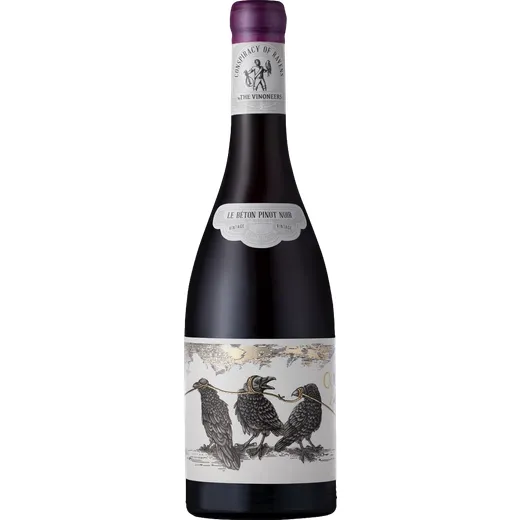
Orpheus & The Raven Conspiracy of Ravens 2022
€29.45 0.75 l · €39.27/l
To the shop at 8winesCeres: frequently asked questions
How far is Ceres from Cape Town?
Ceres is 126 to 163 kilometres from central Cape Town, depending on the route. Over Bainskloof Pass the drive takes just under an hour and fifty minutes without traffic, via the Huguenot Tunnel and Worcester a little over two hours; Ceres Tourism quotes 150 kilometres and ninety minutes.
Does it snow in Ceres in winter?
Snow often covers the mountains around Ceres in winter but rarely falls on the valley floor of the town. Regular winter snow falls in the higher Koue Bokkeveld north of Ceres and on the Matroosberg.
When can you pick cherries near Ceres?
Klondyke Cherry Farm in the Koue Bokkeveld, about 30 kilometres from Ceres, ran its picking season from late November to the end of December in 2025.
How strong was the 1969 Ceres earthquake?
The earthquake of 29 September 1969 had a magnitude of 6.3 and is regarded as the most destructive in South African history. The Togryers Museum in Ceres has a documentation of it.